How to Match a Rug with Your Interior?
A rug blends into your interior best when you pick 1-2 shades from its color palette that repeat elsewhere in the room. Perfect color matching isn't the goal - a touch of contrast keeps the look interesting. What matters is that the rug and the rest of the decor communicate with each other, not just negotiate over floor space.
How Do You Choose Colors for a Cohesive Look?
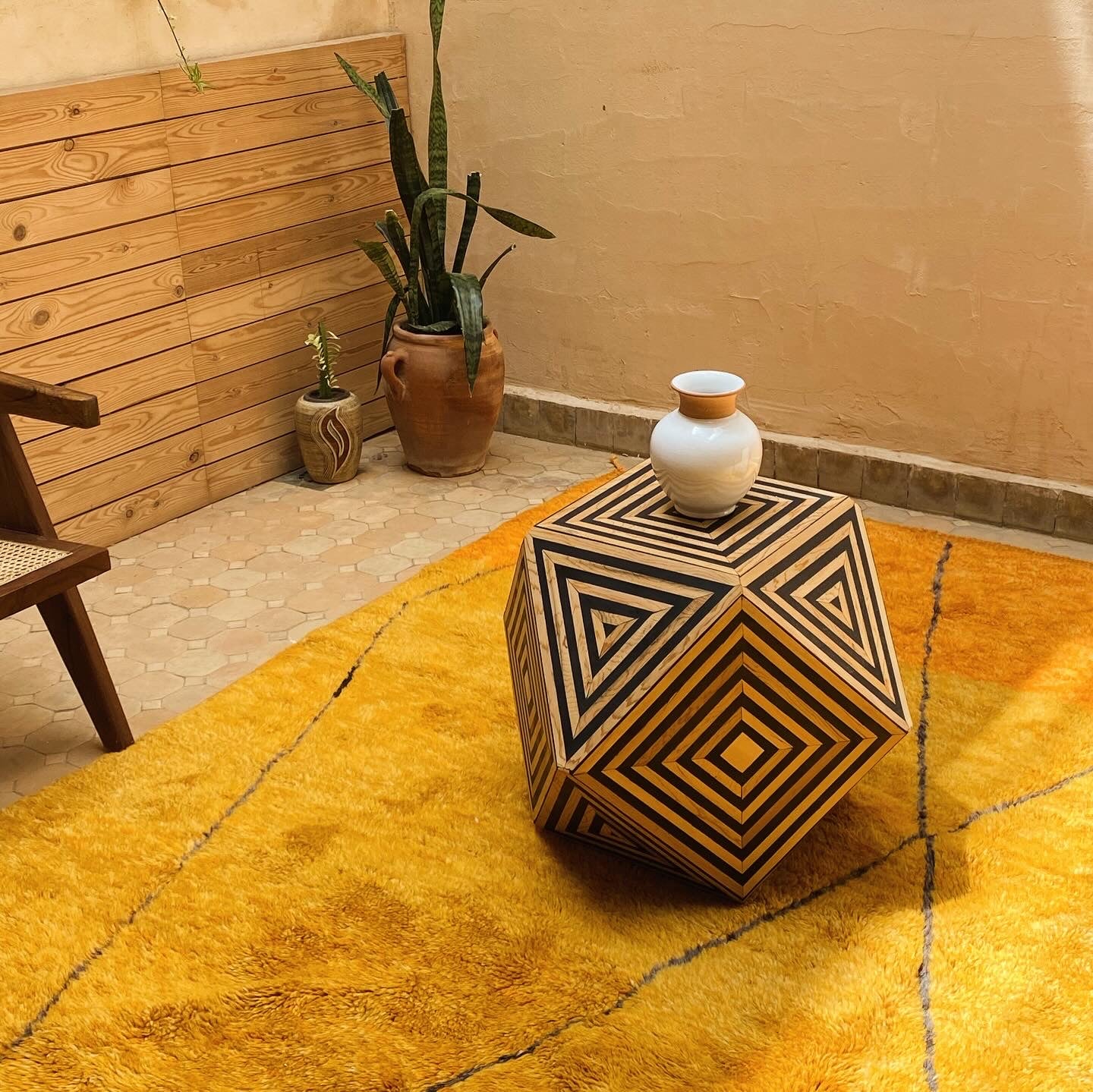
The three-color rule is a reliable starting point: choose one dominant shade, one supporting shade, and one accent color. The rug can play any of these roles - it can be the room's calmest base or its boldest color statement.
Neutral tones like beige, gray, and off-white suit almost any interior and leave room for other elements. If you like to refresh a room's look often by switching out textiles, a neutral rug is a practical choice. A bolder shade or pattern works when it also appears in small amounts elsewhere - in cushions or artwork, for example.
- Dominant color: covers about 60% of the space, often walls or floor
- Supporting color: about 30% - usually the sofa or other furniture
- Accent color: about 10% - cushions, artwork, smaller textiles, or the rug
How Do You Combine a Patterned Rug with Other Textiles?
If the room already has patterned curtains or cushions, choose a rug in a solid color - two competing patterns in the same room make the whole look feel chaotic. If the textiles are simple and solid-colored, the rug can carry the entire visual interest of the room.
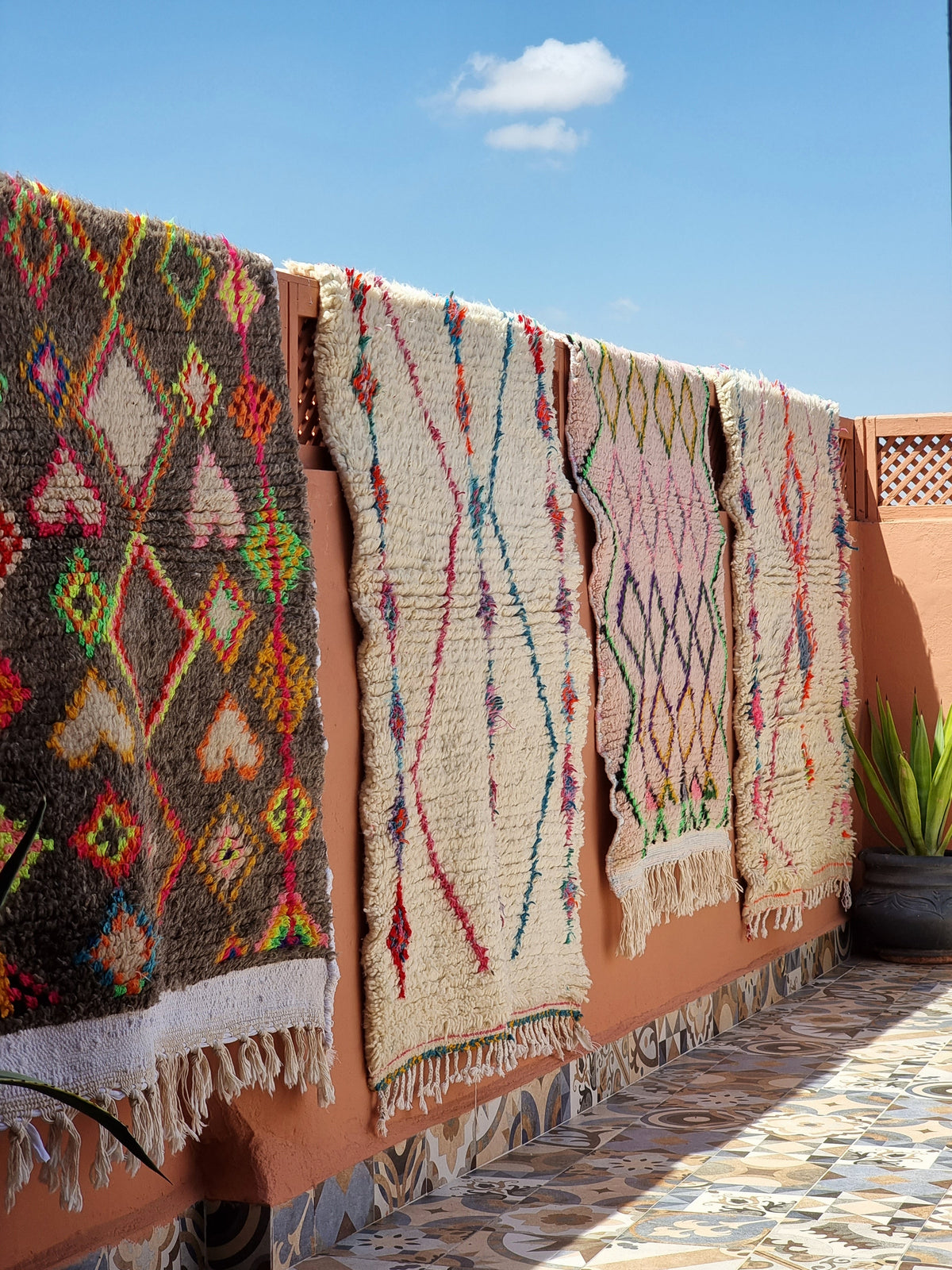
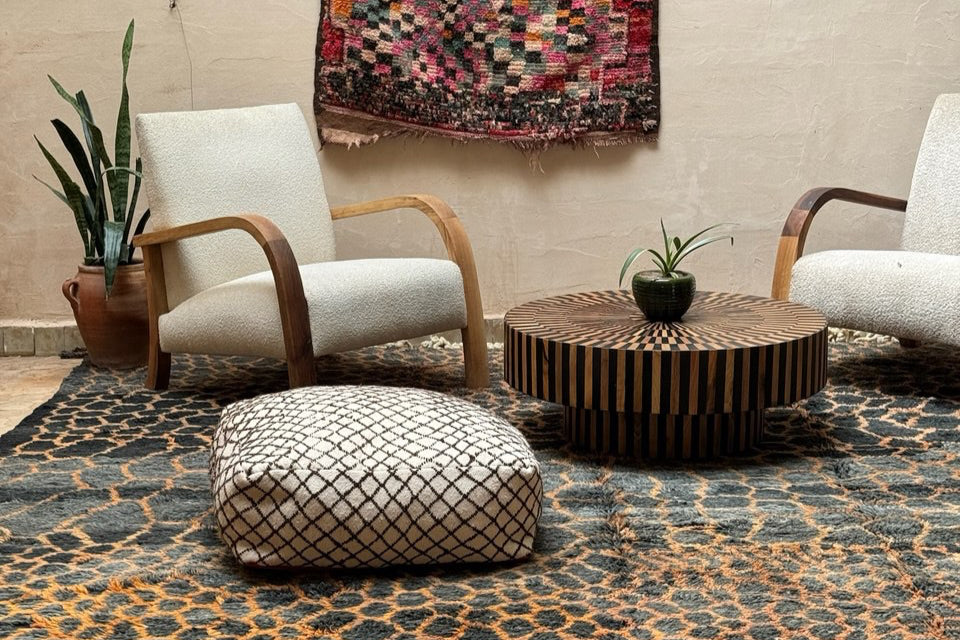
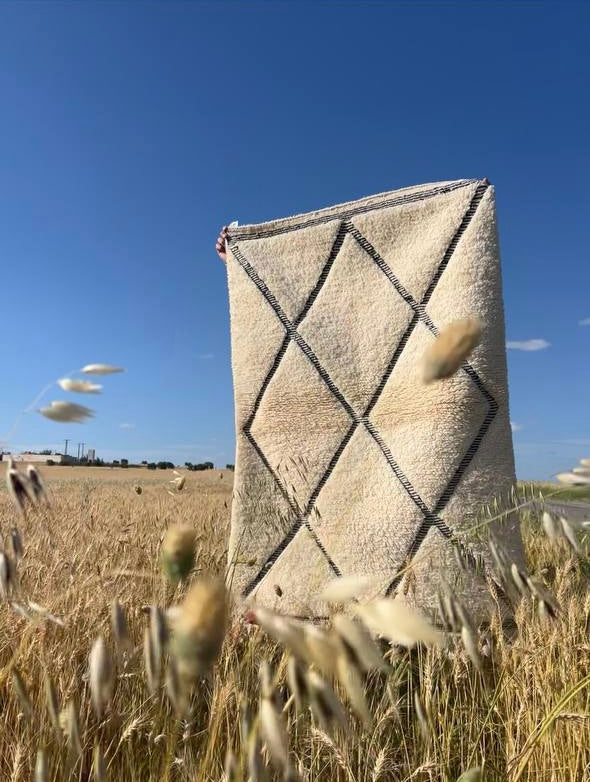
Patterns can be mixed successfully when they differ clearly in scale. A large geometric pattern on the rug and a small repeating pattern on the cushions work together - they don't compete with each other. The irregular, organic patterns of a Berber rug blend naturally even with geometric textiles, precisely because they lack an exact repeating pattern.
The key is that the colors of a patterned rug should appear somewhere else in the room too. Otherwise, the eye is left on the floor with no connection to the rest of the space.
How Does Rug Material Affect the Mood of a Space?
Material determines far more than just the feel underfoot - it communicates the entire mood of the room. Jute and sisal bring an earthy texture that works beautifully with light walls and wooden furniture. Viscose or silk reflects light and suits an elegant, minimalist space.
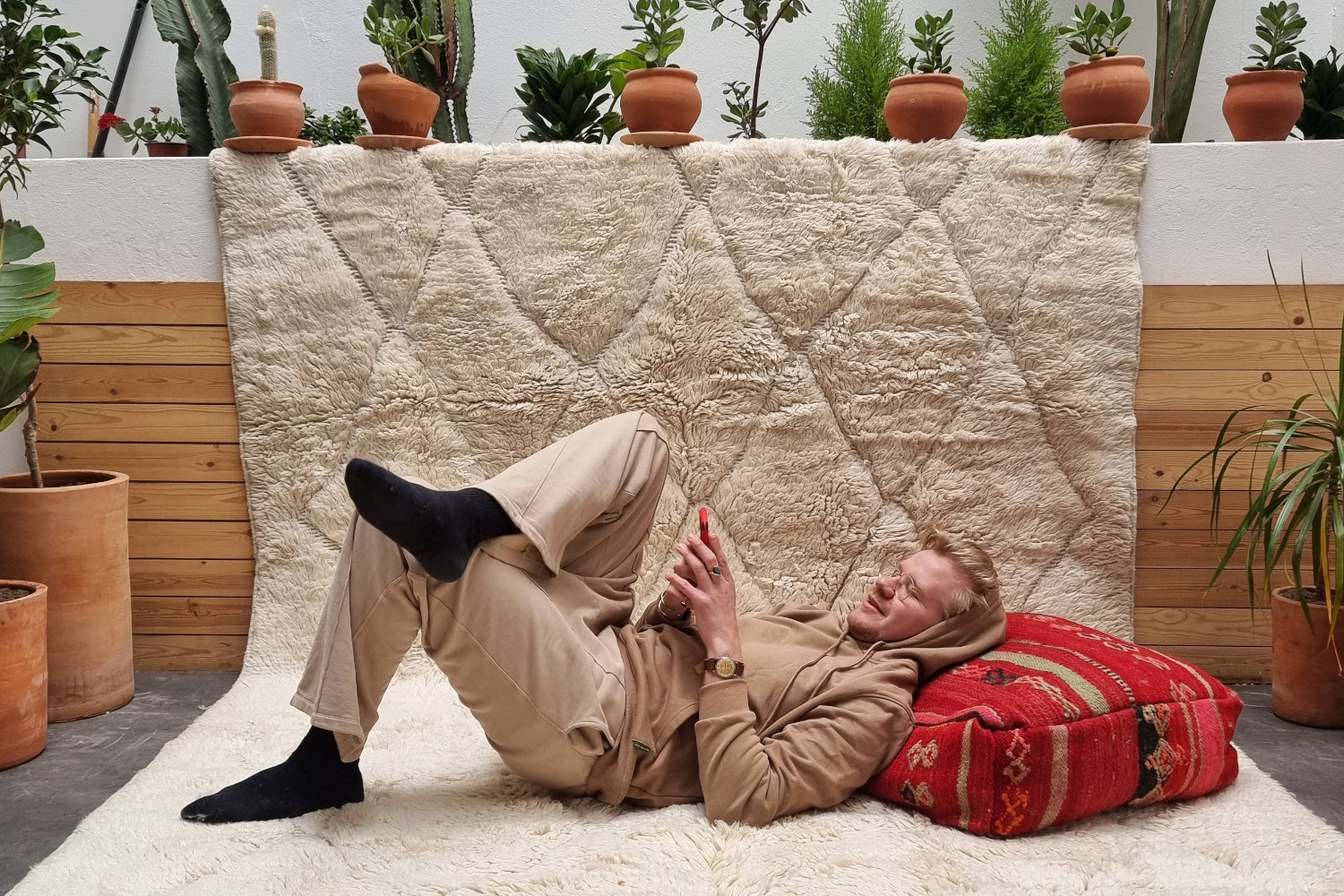
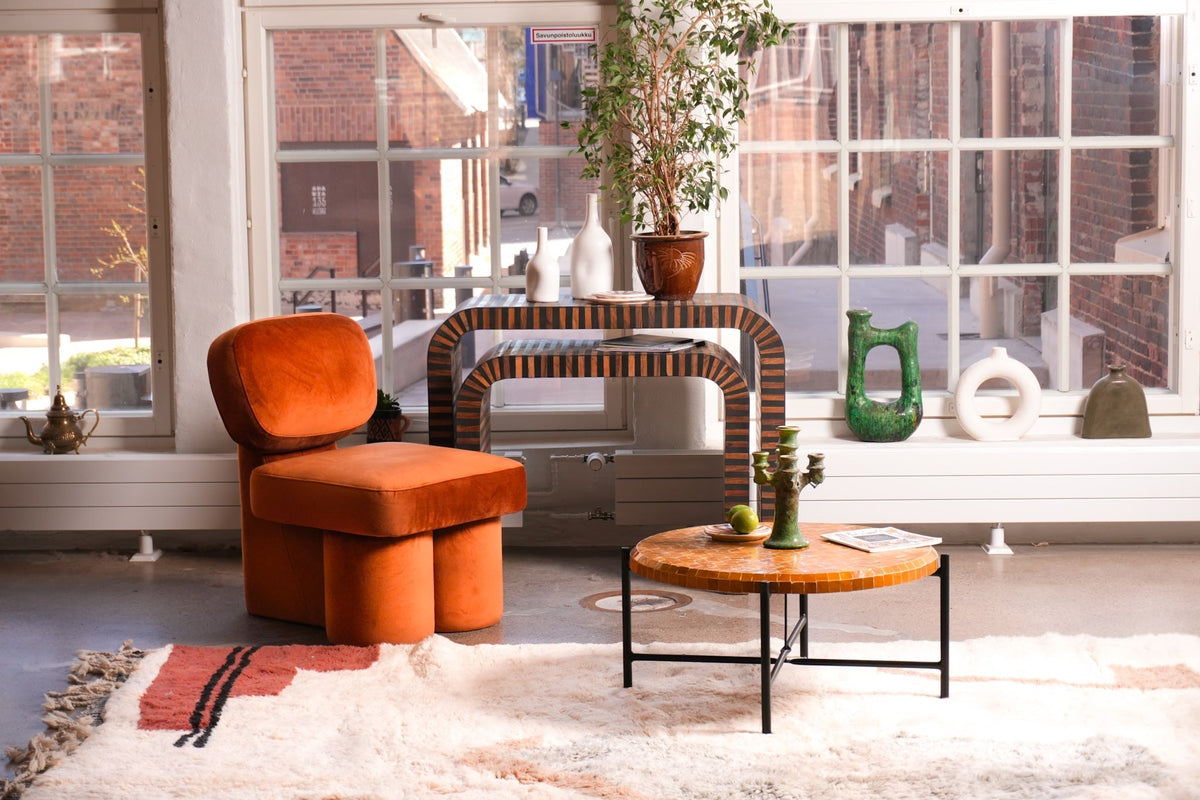
Wool is the most versatile material: it suits both Scandinavian minimalist interiors and boho-style spaces that mix textiles from different cultures. A wool rug in the living room acts as an anchor that ties even disparate elements together, because natural fiber always has a slightly lively coloring - never flat and clinical like a synthetic rug.
Cotton is the most understated option: lightweight, easy to care for, and visually restrained. It suits spaces where the rug is intentionally meant to stay in the background.
How Does a Rug Work as the Anchor of a Room?
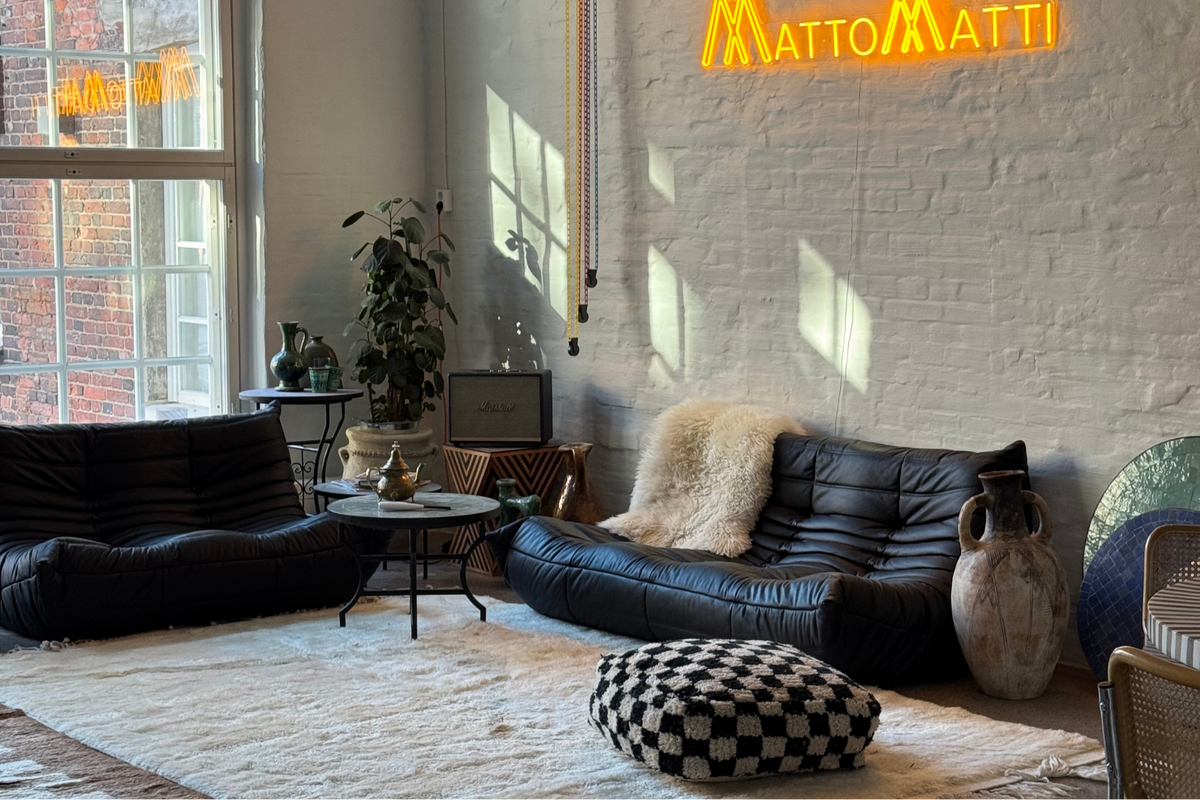
A rug ties furniture together when its size is right for the room - a rug that's too small leaves furniture looking like it's floating on its own. In a living room, the classic approach is to have the sofa's front legs on the rug, or all legs resting on it.
The rug's role as an anchor stands out most when it's clearly the largest single decor element in the room. At that point, it can unify parts of the decor that wouldn't otherwise fit together - different furniture styles or pieces from different eras, for example. A large 200x300 cm rug also creates a sense of space even in a small living room, because it guides the eye to perceive the floor area as larger. You can find more on rug size for living rooms in a separate guide.
There are no strict rules in interior design - only solutions that work for the space and the person living in it. Explore the collection of handmade rugs at mattomatti.fi.